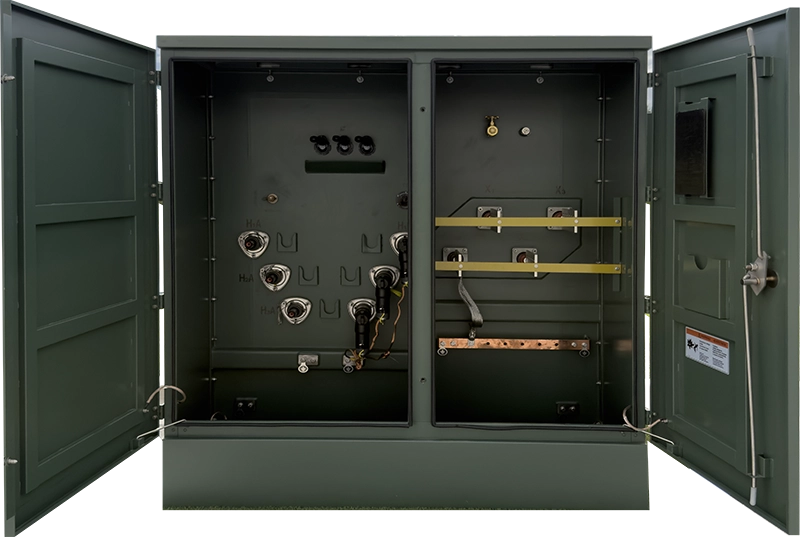
Choosing a 5000″?kVA transformer is a pivotal decision for any medium-voltage distribution system. The right unit must balance performance, reliability, and cost while fitting the specific electrical and environmental demands of the installation. Understanding the key specifications, such as voltage rating, impedance, cooling method, and regulatory compliance, helps engineers and procurement teams select a transformer that will operate efficiently for decades. Below is a comprehensive guide to the most critical factors to evaluate before committing to a purchase.
Core Electrical Ratings
Rated Power (kVA)
- Ensure the transformer’s nominal capacity matches or exceeds the peak load demand of the application.
- A 5000″?kVA rating provides ample headroom for industrial facilities, large commercial complexes, or utility distribution networks.
- Reference: 5000 kva transformer.
Voltage Class
- Identify primary (high-side) and secondary (low-side) voltage levels required by the system.
- Typical configurations include 11″?kV/415″?V or 33″?kV/415″?V for three-phase distribution.
- Verify that the transformer’s insulation class (e.g., Class”?B or Class”?F) aligns with the maximum operating temperature.
Impedance and Short-Circuit Capability
- Impedance (%Z) influences voltage regulation and fault current contribution; common values range from 5% to 10% for 5000″?kVA units.
- Check the short-circuit rating (kA) to ensure the transformer can withstand prospective fault currents without damage.
- Higher impedance reduces fault currents but may increase voltage drop under load.
Construction and Cooling Options
Oil-Immersed vs. Dry-Type
- Oil-immersed designs provide superior heat dissipation and are ideal for outdoor or pad-mount installations.
- Dry-type units are preferred in fire-hazardous environments but may have lower continuous loading capability.
Cooling Method
- Natural Oil Circulation (ONAN) is standard for many 5000″?kVA transformers; it relies on buoyancy-driven oil flow.
- Forced Oil Cooling (OFAN) can be added for higher load factors or elevated ambient temperatures.
- Consider ambient temperature, installation altitude, and load profile when selecting the cooling system.
Physical Dimensions and Installation Considerations
- Pad-mount transformers typically require a concrete pad of at least 3″?m”???”?3″?m with a 0.5″?m thick foundation.
- Check clearance requirements for maintenance access, ventilation, and fire protection.
- Weight can exceed 15″?tonnes; ensure the supporting structure can accommodate the load.
Efficiency and Losses
- Core (no-load) losses are primarily a function of the magnetic material; modern grain-oriented silicon steel can keep these under 2″?% of rated kVA.
- Load (copper) losses increase with the square of the current; selecting a transformer with optimized winding design reduces operating costs.
- Energy-efficient models may qualify for utility rebates or meet local energy-conservation standards.
Regulatory and Safety Standards
- Compliance with IEC 60076 series ensures global acceptance for design, testing, and safety.
- Local standards (e.g., IEEE C57.12 in the United States or IS”?2026 in India) may impose additional requirements for noise, vibration, and environmental protection.
- Certification from recognized bodies simplifies permitting and insurance processes.
Cost Factors and Pricing Transparency
- Base price is influenced by capacity, voltage class, and cooling method.
- Additional costs may arise from custom tap changers, special insulation, or extended warranties.
- For a clear view of market rates, consult the 5000 kva transformer price listing, which provides up-to-date pricing and optional accessories.
Maintenance and Lifecycle Management
- Regular oil testing (dielectric strength, moisture content) prolongs service life.
- Thermal imaging during routine inspections helps detect hot spots before failures occur.
- Designs that allow easy removal of bushings and tap changers reduce downtime during scheduled maintenance.
Integrating the Specification into Procurement
When drafting a purchase specification, embed the critical parameters discussed above into a concise technical data sheet. Include:
- Rated power, voltage, frequency, and impedance.
- Cooling method and oil type.
- Physical dimensions, weight, and mounting requirements.
- Compliance references (IEC, IEEE, local codes).
- Warranty terms and recommended maintenance intervals.
- Link to detailed product data: 5000 kva transformer specification.
Conclusion
Evaluating a 5000″?kVA transformer involves a balanced review of electrical performance, construction quality, regulatory compliance, and total cost of ownership. By focusing on the specifications outlined, rated power, voltage class, impedance, cooling method, efficiency, and safety standards, engineers can select a unit that delivers reliable service while optimizing upfront investment and long-term operational expenses. A well-documented specification sheet, coupled with transparent pricing information, ensures a smooth procurement process and a successful installation that meets the demanding needs of modern power distribution networks.